Tall guard in Istanbul

Tall guard in Istanbul
Deciding which camera to pack for my trip. Bulk, quality, weight vs convenience.

Monday, May 2, 2011

The Overlander, a New Zealand train

The ultimate train ride, the Overlander from Wellington to Aukland passing through the center of the north island.   The train consisted of 6 coaches pulled by a diesel engine as it left Wellington, eventually changing to an electric engine when it reached the edge of the city.  The first sign of an informal atmosphere occurred when the young man working at the small buffet counter delivered hot coffee to the engineer at each stop by meeting him halfway on the platform.  At noon we actually stopped for an hour for lunch at a small town that becomes a ski resort in the winter.  While most passengers ate a sandwich at the station cafe, I wandered nearby streets in seach of street art and graffiti, actually finding a good example to photograph.  One coach had small open air platform that would accomodate up to 8 people.   It was to my advantage that not many people elected to stay there as I spent most of my time enjoying the fresh air and taking photos.  The sign reading "do not lean beyond the railing" needed to be taken seriously since there was barely any clearance as the train passed through tunnels, over bridges and along groves of trees.  Not a wise idea to stick your head out far enough to see the approaching landscape.

The route passes through spectacular scenery, emerald green fields and hills, deep gorges and snowcapped volcanic peaks.   The white dots appearing in the green landscape are sheep, millions of sheep!   I am sure that I saw more of these animals in one day that I had previously seen in my lifetime.    No one can tell you how many there are, but they number many times that of the human population.  Another surprise!   Dairy cows actually eating grass.   Yes, all of the animals are outside; cows, sheep, goats, pigs.   About half of the population of lives in the two or three major cities so that does not leave many people to be scattered throughout the rest of the country.  Farms and villages are few and far between.   The train crossed several high tressles and descended from the higher elevation by circling in a spiral to avoid an otherwise steep grade. There are still some areas that are forested, but it is obvious that the Maoris and later, the European immigrants thought pasture for sheep was more important that trees.   Some of the remaining forests are in the national park near the summit where three snow covered volcanos provide a landscape remeniscient of Central Oregon. 

Friday, April 22, 2011

Second "last day" in Melbourne

Melbourne, St. Kilda Beach, 21 April 2011.
Had a terrific "second" last day in Melbourne, the day that should not have been!   It should have been my first day in Aukland!  Due to the lost passport and travel documents, that fortunately I retrieved from the Carlton Hotel at 11:00 am April 20, I missed my 10:50 am flight to NZ.   That meant spending time at Qantas rescheduling my flight and spending two more nights in Melbourne.   The St. Kilda Beach area of Melbourne had been on my list, according to many a hotspot for street art and graffiti, just what every globe trotting grandfather is looking for!!!!!    Free day, time to explore.   Took the train to the city and tram #16 to the beach.   Wow, boardwalk, pier, beach, yacht club, enticing pastry shops and even Luna Park, a classic entertainment park.   I don't know if this is THE Luna Park, but the wooden framed roller coaster, giant merry go round, carnival rides, all accessed through the entrance which is the open mouth of a huge monster head, certainly recall the early part of the 20th century.  I returned there after dark to take photos of the lights and action.
Typical of my days wandering neighborhood alleys looking for photo ops, camera(s) around my neck and inquiring of locals as to the best graffiti, I met more interesting people.  First of all there were   American skateboarders taking advantage of a sloped part of the boardwalk to perform jumps and other manoeuvres while a professional photographer captured their stunts on film.   I think I got some amazing photos of their silhouettes against the sky.  By asking about their activities, I met the local councilman who was promoting a skate park for the area, and the perfect guide to examples of street art in his district.  He spent 2 hours driving me around to all of the best examples, leaving me at an historic pastry shop to have a dessert and cappaccino.   In one cafe where we stopped, I met a waiter from the U. of Nebraska who turned out to be the first Beta I have met in my travels!   While taking photos of the skaters from my position on the beach, I met Phil, a young man walking his dog, took some excellent informal beach shots, including some of his very artistic tattoo, another form of street art!   Met  and photographed Geoffroi, a student from France who was braving the cold water of the bay.  Finally, asking directions to another collection of graffiti, I met a lady who is a couchsurfer with friends in New Zealand.  We had a good conversation about our experiences as couchsurfers.   I returned to the pier to take evening photos of the city across the bay.   Although there was the option of waiting to see little penguins return to their nests in the rocks, I decided to head to Luna Park for some colorful evening shots of the rides.   Back to the center of the city on the tram, a train ride to Peter and Daniel's house in Craigieburn, my home for the last two weeks, and prepare for departure on Friday.   Another great day of meeting people and exploring Melbourne.

Tuesday, April 12, 2011

Sydney, Australia

Sydney has taken its place on my list of the world's most beautiful cities.  Situated on a wide bay with numerous inlets, many of the neighborhoods  have spectacular views of the water.  The city center  includes a picturesque and  busy waterfront from which fleets of ferries shuttle passengers to communities situated along the bay.  Neo-gothic cathedral spires and yellow sandstone colonial building dating back to the era of Queen Victoria nestle among gleaming modern high rise structures while Hyde Park and the Botanical Garden provide nearby green space.   As all of the postcards suggest, the soaring arch of the Sydney Harbor Bridge and the sail shaped roofline of the opera house command the attention of camera toting tourists.  Cities with similar settings come to mind:  Seattle, Vancouver, San Francisco, Istanbul, Hong Kong and Capetown.  Accompanied by Dirk and Wolf, my two German dorm mates at the Wake Up Hostel, I explored the beach communities of Bondi and Coogee, known as the best surfing areas in Sydney.  The walkway follows the rugged coastline for about 3 kilometers between the beaches and provides spectacular views of the headlands, small hidden coves and pounding waves.  Surfers ride the swells waiting for the perfect curl.  Graffiti abounds on the cement wall behind the beach, perfect material for my photo project.  Another day, another ferry ride, same companions, this time to explore Watson Bay, a part of the sprawling city that was once a sleepy beach community.  Small cottages still line some streets, remnants of a past when city dwellers considered this a weekend escape and an historic lighthouse marks the entrance to the harbor.  We rarely study Australian history; however, visits to art galleries and historical museums reveal  glimpses of 19th century that resemble that of America, a pioneer spirit, westward expansion, rural life and undisturbed nature.
It is all English, but how did we end up with such diverse accents?  Accent?  What accent?   It is all of the others who have the strange pronunciation!   Often, Europeans have learned "American English" and have less of an "accent" than people from Ireland, Scotland, England, South Africa and India.  Return to the saying on the tee shirt I bought in Bangkok and that is so frequently used in S. E. Asia-  SAME  SAME  BUT DIFFERENT!   Occasionally I will ask someone to repeat a word or phrase that I have not understood, and they will do the same with me.   I find myself speaking more slowly and more distinctly, being careful to enunciate my words to the point that some people ask where I am from and say that I don't sound American.  OK, so I will have a strange unidentifiable accent when I return home!

Kangaroos!  Determined to see some of these critters in the wild, I took a tour to the Blue Mountains  just to the west of Sydney.   The low foothills gradually become a small mountain range reaching elevations of 3000-4000 feet, a succession of  ridges covered with temperate rain forests composed mainly of eucalyptus trees and "Australian bush." Millions of years of erosion have created sheer cliffs, backdrops for numerous spectacular waterfalls that dot the area.  Recent rainfall has encouraged colonies of mushrooms to spring from the mossy ground cover shaded by palm shaped tree ferns.   Thousands of steps have been carved into sandstone cliffs, an essential part of the trail leading to viewpoints and waterfalls as one descends to the canyon floor.   The easiest way to return to the canyon rim is to take the cable railway that claims to be the steepest in the world, a claim that seems justified as one's gaze becomes nearly vertical when the train passes through a long tunnel carved through the cliff.
But where are the kangaroos?  They were not in the forest.   We make one last stop before returning to Sydney, an grassy open area in the national park.   Nearly leaving without success, the driver takes one last dirt road, and VOILA,  a group of four kangaroos busy nibbling grass.  They pay little attention to us as we approach slowly with our cameras; however, as if paid to present some kind of show, the two males rise on their back legs and balance on their tails while they put on a wrestling performance.  Finally, tired of the attention, they hop off to greener pastures and we return to the city.

More good luck!  The driver had connections to people who do street art and graffiti, offered to show me some examples and even to meet the artists.  After delivering the other passengers back to their hostels and hotels, he spent several hours introducing me to artists and taking me to see examples of their work.
Another interesting adventure and more photos in my growing collection.

Saturday, April 2, 2011

Angkor Wat

On board Quantas flight 2 from Bangkok to Sydney- seafood soup, green salad, fish and couscous, chocolate cake, red wine, time to close the chapter on Cambodia by assembling thoughts on Angkor Wat.

How to describe one of the top ten attractions in the world and one of the top five on my list.  The remains of a civilization that dominated SE Asia from 800-1300, now partially restored ruins that were once covered with jungle vegetation.  Why do we visit the remains of great civilizations?  Egypt, Greece, Rome, Petra, Tikal and Angkor Wat.   Who were these people?  How did they live? What inspired them to build great cities, monuments, temples, shrines, tombs, water systems?  How were they able to accomplish these feats, and why did they disappear?  Thoughts run through your mind as you clamber over piles of stone, climb steep eroded stairways and photograph sculptures missing heads, limbs and other features.  The ruins of Angkor Wat cover an area the size of Paris and was once a city of one million people.  I won't attempt to remember the names of rulers or even specific names of temples.  I will leave that to the history and guide books.  Kings have always built monuments and religions have created great places of worship.   Here in Angkor Wat, the statues represent Hindu and Buddhist beliefs and the bas relief murals portray both military campaigns and scenes of daily life.   As you enter sacred areas you are greeted by nagas, the long 7 headed snake that traditionally protects the gods.  Everywhere you are met by ferocious figures, graceful dancers, demons, gods, kings, elephants, lions, defending entrances and gracing terraces.  From the top of crumbling temples, you look over a complex that is now in ruins and try to envision the site that was once part of a vibrant city.  Climb through doorways that have lost their walls, head through rooms that have collapsed into piles of stone, walk along terraces that once separated pools or canals of water and gaze at giant trees whose roots have engulfed stone walls.  Hiring a tuk tuk for transportation, I spent 4 days visiting the complex beginning with the inner most temples and ending with those more remote, the fourth day reserved for re-visiting my favorites after studying a guidebook that I had purchased from a Cambodian who had lost an arm to a landmine explosion. 
A highlight of my visit was a late afternoon stop at Angkor Wat, the largest temple of the complex.  The sky was dark and threatening, creating a dramatic backdrop for the scene that I wanted to photograph.  A violent thunderstorm developed forcing me to seek shelter in the entrance to Angkor Wat, the perfect place to capture the scene, the silhouette of the temple outlined against a sky from which God could have appeared at any moment.  Angkor Wat, an experience to savor for many years.

Tuesday, March 15, 2011

Luang Prabang to Saigon

As with Huay Xai, I had intended to spend a couple of days in Luang Prabang and ended up staying for nearly 10 days.  What a beautiful spot on the banks of the Mekong.   Many French colonial building have survived and have been turned into boutique hotels, restaurants abound, French tourists are everywhere!  In some places it seems like a French village with Buddhist temples and monastaries. I found a small hotel on a side street, the Pak Am, met the hotel workers and even visited their Hmong villages.  The morning market was just around the corner, so village people, mostly women, begain arriving very early to set up their stalls.  Many of them came across the Mekong on the small wooden boats and then balanced their baskets of produce on the long bamboo stick resting on their shoulder as they climbed the steep river bank.  The variety of offerings was amazing, and not always identifyable.   Various parts of animals, actually, all parts! poultry,fish, tubs full of frogs, pupae from cacoons provide protein while tubs of different kinds of rice, baskets of colorful fruit and green veggies and even weeds from the bottom of the river, are the accompanyments.  The wide assortment of people and clothes complete the scene.  Most of the locals eat a noodle soup breakfast at the market and in the evening there is a food market with buffet style offerings- a plate full of food for $1.00, many kinds of grilled meat and fish, spring rolls and some deserts.  Fresh fruit is abondant;  mango, pineapple, dragon fruit, papaya.  Tents sprout in the main street like mushrooms at the evening market where tribal women offer Hmong quilts, embroidered items, tee shirts, silk scarves, many of which they have woven themselves.  Luang Prabang has many "wat" or Buddhist temples and monastaries so groups of young novice monks walk the streets going to and from class and stroll about in small groups in the evening.  Most of them want to practice their English if given the opportunity and are willing to sit in the shade and chat.  Their saffron colored robes add color to  photos.  In the morning, they get up at
4:00 am for prayers, go through the streets at 6:30 am to collect alms consisting of sticky rice and other treats.  They have a morning meal and lunch, but do not eat after 12:00 noon!  Most of them come from rural villages where there is no opportunity to continue their education; thus, the temples provide free schooling until they are 20 years old,
 Since I was able to arrange my Viet Nam visa from Luang Prabang, I did not go to Vientiane, the capital city.  I flew to Hanoi to avoid a long bus ride.   My friend, Rich Litchfield, who volunteers as an orthodentist every year in Hanoi, reserved a hotel room for me and I was able to meet his orthodentist friends.  I had a wonderful multi-course lunch with one group, spent a couple of hours in English conversation with them, and had a Vietnamese restaurant dinner with the family he has known for 12 years.   One of the first courses was deep fried swallow!!!   Although initially hesitant, I decided to crunch on the little corpse, mashing the bones and head and finally washing it down with a swig of beer.  Not sure of the nutitional value of such a little critter and am certain that I would not order it on my own. 
Hanoi is hectic- motor bike traffic dominating the streets, changing lanes often, not stopping at intersections, and particularly, not stopping for pedestrians.  You take your chances each time you cross the street and just keep walking.   Drivers are experts at calculating the speed at which they are traveling and the pace at which you are walking. My favorite means of transportation, on the back of a motorbike taxi.  Most sidewalks are occupied with sales stands and parked motorbikes: thus, you walk on the edge of the street.  I finally got used to the old section of the city, but still got confused and lost the day I left.  I visited the Ho Chi Minh mausoleum complex, Temple of Literature, Hanoi Art Museum, and museums dedicated to the wars fought in Viet Nam.  It is hard to walk far without seeing  a poster or sculpture of  "Uncle Ho." 
I spent 2 nights and 3 days on an excursion to Halong Bay, that amazing place where steep rounded mountains rise out of the bay.  Capturing the entire scene is impossible, but I certainly tried, and did a few 360 degree videos.  The low clouds added an air of mystry to the bay, making you think you were on some small pirate ship about to surprise an enemy crew around the next corner.  One night spent on the boat, moored with 30 or so, other wooden junks, a visit to an oyster farm where we saw pearls being taken from the shells, treks to two sets of caves, a visit to monkey island where there is a small beach and a few monkeys and the return cruise, rounded out the experience.   A group of only 6 passengers, several delicious dinners and a friendly crew, made us feel special.  
I also went to a village near Hanoi known for its silk production; however, more interessting than the small production of silk, was a small factory on a back street producing stacks of plastic bags!  The initial substance looks like a gigantic glob of play dough. It is heated,  shredded, blown into a  giant transparent bubble, and is cut into strips to form the bags.  So this is where some of those bags that are everywhere, come from!
I decided at the last minute to include a trip to Sapa, a small town in the mountains, known for its Hmong villages and terraced hillsides.  It is at a higher elevation, was in the clouds and was very cold.  The only heat ;in the hotel was the electric blanket on the bed that  I quickly took advantage of.  Went on a short trek to some villages the first day, walked the small city to see the market and shops and then went for  a 12 km trek through the terraced rice paddies the second day.  Even though it is too early for the rice fields to be planted, it is an amazing sight.  Most challenging was the muddy hike for several km, down the mountainside on the slickest quagmire of yellow clay I have ever seen.  At first refusing to buy a bamboo walking stick from one of the children, I finally relented and paid 50 cents to the girl who persisted by following me, knowing that I would eventually realize the necessity of such a pole.  I also grabbed the hand of the tiny Hmong lady who kept following me on the other side.  She also knew that eventually I would accept  her help.  Camera around my neck, bamboo pole in my right hand, Hmong lady's hand holding my other, I slipped and slid my way down the steep slope.  Thanks goodness for the rubber boots that we all rented at the hotel.  Rice paddies, rustic houses, cascading stream at the bottom of the valley, wispy clouds floating by, the scene was post card perfect.
Took the night train back to Hanoi, shared the 4 bunk compartiment with a German tourist and two Vietnamese men.  Had a restless night bumping along the track laid by the French over a hundred years ago, was too hot at the beginning and too cold later.   Not my favorite way to travel, but one more adventure.  I then took an afternoon fligjht to Ho Chi Minh City/ Saigon, where I am today. 
The city streets are wider, but traffic is just as hectic.  Museums seem to concentrate on war memories, and I am becoming sturated with the historical events that have not been kind to Viet Nam.   I think Hanoi is more traditional and interesting than Saigon.  In addition, the weather in Hanoi was cool and comfortable; in Saigon it is hot and humid.   I prefer cool!

On to Cambodia.

Thursday, February 24, 2011

Life on the Mekong

"Shoving off" and "watching the world go by" have literal meaning here!  Left the Gateway Villa Hotel where I had been staying in Huay Xai for the two day slow boat trip to Pak Beng and Luang Prabang.  Bid my friends goodby, shared a tuk tuk to the dock with a German couple, bought my ticket and played petanque with a fellow passenger while waiting for departure.  My fear that this would be some kind of party boat did not materialize.  The potential party crowd found their place on the bow; smoked, drank, sang and did not move!   Everyone brought food and drinks aboard for the 8 hour trip to Pak Beng so they would not have to purchase the more expensive offerings on board.  As someone who has always had his nose pressed against the windows of trains and planes in order not to miss any of the sights, it is hard to understand how some people can read, sleep, listen to ipods or chat for the entire trip without appreciating the amazing scenery.  This long, narrow, flat bottomed boat is controlled by a pilot in the front.  The wheel is connected to a small rudder in the rear by means of chains threaded through PVC pipe above the windows and the very rudimentary throttle has a small cable running to the diesel engine in the rear. A glance into the engine compartment gave me comfort as it had been blessed with flower offerings and a small Buddha.    Relax, take photos, eat and enjoy!  
Day two-  After spending the night in Pak Beng, the village full of guest houses that is midway between Huay Xai and Luang Prabang, it is time to continue down stream.  Taking advantage of the swift current, the boat slips into the middle of the Mekong, gliding between steep ridges covered with tropical vegetation, occasionally old forest, but more often low trees or cultivated patches that have replaced the original jungle. Jagged rock outcropping line the banks, extending into the river at sharp angles and creating brief areas of rapids.  Since it is the dry season, the river is low and the boat scraped bottom on several occasions.    Bamboo poles extend from the rock formations, supports for fishing nets of fishermen who live in nearby villages.  Beautiful sandbanks with multiple water lines resembling stairs have accumulated between the rock formations providing variety to the landscape, playgrounds for children, warm resting spots for clusters of water buffalo and an easy place to grow peanuts at this time of year.  They also serve as a reminder of the water level during the rainy season, perhaps 30 feet higher than today in the narrowest places.  The surface of the river glistens; silver and gold ripples masking the murkey brown green of the water.  Mountain ridges, four to six deep, continually appear before us and slowly fade into the distance behind the boat.  Many people pan for gold in small inlets, others fish from rocks using weighted throw nets.  Long, slender wooden boats moored at the river's edge indicate the presence of villages hidden in the trees.  Seated near the front of the boat, all I hear is the low, steady drone of the engine and  light splash of water along the bow.  Slow boats heading north pass making the same sound, but an occasional "fast" boat, a small banana shaped boat carrying 8 passengers wearing crash helmets, creates a slight turbulance as it roars past.  We stopped several times to allow villagers to jump onto the beach where they were greeted by family or friends.  For two days, life proceeded at the pace of the Mekong current.
Relaxing in Laos, and loving it!

Friday, February 11, 2011

Adventure in Laos

Lots has happened since my last entry; however, I decided a quick jump forward was necessary to capture events of the last few days.

Left Thailand, crossed the Mekong River on a small wooden boat and landed in Houeixai, a small river port in Laos where I intended to spend one night before continuing on a two day "slow boat" trip to Louang Probang.   All of that changed when I read a notice announcing an evening campfire at the home of a family beginning a project to help village people, and that they needed volunteers.  Dinner and a campfire has turned into a week of tutoring English several hours each day and invitations from students working at my hotel to visit their villages and meet their English teachers at the local college.  When one student took me to the college on his motorbike, I ended up teaching two classes and met three of the five teachers.   I have a standing invitation to return. This evening I have been encouraged to attend a celebration at the local Buddhist temple, a farewell dinner for the couple that has been volunteering at the project, and have more invitations for the weekend. I am certainly learning more about Laos and Lao culture by interacting with locals here than if I were to simply photograph more temples, Buddhas and street scenes.

Yesterday the family operating the volunteer project planned an outing for the French couple, Igor and Veronique, who were married recently and who are on a one year, around the world honeymoon, and me. We rode on motorbikes behind three of the men in the family to a village 70 kilometers from this river port and had an experience we will never forget!   First of all, these are small motorbikes meant to be ridden on city streets rather than treks in the mountains.   I rented an additional bike since the family had two vehicles and only foreigners are allowed to rent bikes.  Lao time means that things happen slowly, so we left the house about 10:30 am, all wearing helmets, two of us carrying small backpacks with cameras and a few snacks, and began the adventure.   I immediately thought of the Beta Theta Pi principle of "confidence and trust" as the bikes went screaming around turns and raced out of the town.   I could not worry about what might happen this day, must believe that the driver in front of me knew what he was doing, and just enjoy the experience.  I hung on for dear life, anticipating the corners and bracing myself for bumps in the road.  The pavement ended about 15 kilometers from town, the speed barely slowed, and the serious challenge began.   Unimproved mountain roads, single lane, torturous curves, steep inclines- one indicated at 15%- loose gravel, dust, all combined for a wild ride.   These people begin riding motorbikes at about age 10, and most of them on this type of road, so it is not a new experience for them.  Once we left the paved road, we began climbing into mountainous terrain, ascending ridges, descending into valleys, one after another, occasionally passing through local villages where children, chickens, dogs cows and even water buffalo quickly stepped aside as they heard our approaching bikes.  I must admit that the landscape was spectacular, especially the views from the ridgetops where a succession of  ridges resembled the surface of a giant blue cauliflower.  Tall trees have been removed from much of the area and only here and there stands of original timber still remain.  Otherwise a few old trees rise above a tangle of bamboo, vines and smaller varieties of trees, all of this seemingly inpenetratable. 
We stopped briefly in several villages to contemplate the houses, usually standing on  stilt like frames built of wood, sometimes with wooden slat walls, but more often sided with sections of woven bamboo.  The common roofing material is woven grass and only a few buildings have corregated steel or fiberglass.   We stopped for lunch at a roadside stand at the side of a house where the lady had a black pot setting over a small fire.  She prepared noodles for us and offered a soup with chunks of a glutenous substance made from rice.   Several times we had to chase the chickens away from the area where she was preparing the food!  Not an unusual occurance here.   Around villages situated in the valleys and along streams, small plots of rice are cultivated during the rainy season.
The final destination and experience had been a well guarded secret so we wondered what was in store when it was necessary to buy candles and obtain a few flashlights at the last village.   Four local girls were hired as guides and we discovered we were to explore a nearby cave complex.   Spelunking had not been on my list of things to do in Laos!    The setting was spectacular as we left the store, walked past the small primary school where laundry, colorful childrens clothing, was draped over the fence enclosing the playground (we speculated that they might wash their clothes during recess), waded across a stream and begain winding our way through bright green rice paddies.  Our destination, large rounded, rocky mound rose from the valley floor, surrounded by a maze of recently planted, and currently flooded, paddies.  Here and there small thatched roof shelters built on bamboo stilts provide shade for those working in the rice fields.  We zigzagged our way along the narrow muddy dikes separating the patches of rice, jumping small streams flowing from one section to another.   I wondered why I had bothered to take off my shoes to ford the stream at the beginning as it was obvious my shoes were going to be very muddy and wet for the return trip.  During colonial times, the French had built a concrete stairway to one cave entrance, but that did not lead to the main network of tunnels.  We continued to another entrance where it was necessary to wedge our way through a slot barely wide enough to allow passage for our shoulders and derriere.   Once inside, the space was larger, we lit the candles, let our eyes adjust to the darkness and began our exploration.  This chunk of mountain was perforated with holes eroded over the millenia and gave us the impression of having entered a giant wheel of Swiss cheese.  An occasional opening above allowed some light to enter from outside; however most of the rooms were only illuminated by the dim light of our candles and flashlights.  Bamboo ladders provided access to some levels that would otherwise have been inaccessible.   Finally, in the far reaches of this complex, there was evidence long term moisture, perhaps tens of millions of years ago.  Seams in the rock showed evidence of mineral deposits, flowing limestone stalagtites and mounded stalagmites where the water droplets had landed.  One giant post about 15 feet high and  several feet in diameter must have taken millions of years to accumulate.  The top surface of another looked like an enormous stone stump whose unique surface looked as though it had been eaten by worms.   Strange dark spots that we thought at first might be bats dotted the top of several high caverns.   We spent more than an hour investigating sections of this massive complex, trying to capture some of the beauty in photos and speculating at the origin of this natural wonder.  At the exit high on the side of the mountain, we had a stunning view of the surrounding rice fields and a small village at the base of a forest ridge, all bathed in the solf light of late afternoon.   Finally, deciding that we needed to reach paved road before it got dark, we left the cave, retraced our steps through the  beautiful rice paddies, waded  the stream- wearing shoes this time- paid the guides and began the return trip.  The lighting was perfect for photography, but we knew that not many stops would be possible.   A flat tire required me to wait along the side of the mountain road for about 20 minutes while my driver returned to see what was keeping the third bike from catching up.  Alone, I listened to the cracking sounds of a tropical forest, took photos of the  bamboo branches curving over the narrow road, nodded to a few people who passed on bikes and to the drivers of a truck that passed and greeted two men walking home from their day's work, axes in hand, not knowing  what was happening or when my driver would return.  Tire repaired thanks to a nearby village, we continued on our way, passing a slow moving logging truck carrying 4 huge logs cut from an ancient tree, carefully descended some of the steep rocky slopes because only the rear brake was working, occasionally coasted to conserve gas, passed workers returning to their villages slowly advancing in their garden tracter like vehicles, speeded on the straightaways to gain time.  In each village, dinner was being prepared  in pots boiling over small fires along the road or near entrances to houses and people were returning home from their work in the fields or forest.  Igor, Vero and I exchanged our thoughts about our ride at each stop, wondering what the next segment would be like.   Crossing the last wooden bridge, we arrived at paved road, achieved higher speeds and raced through the darkness for home.  When I got off the motorbike, I could hardly move and felt as though I had spent the day on a horse or camel.  Can you get bowed legs from riding a bike? 
We were all in agreement that it was a unique and memorable experience, but were not sure that it was one we would want to repeat anytime soon.

Safe and sound in Laos.     Jon

Thursday, January 27, 2011

Losing track of time- India and now Thailand

Has it really been three weeks since I last composed an entry!?  Since it is not possible to relate everything I have done, consider these exerpts or highlights from my adventures.

Escape Mumbai by plane.  Passed through the dense brown haze and smog at about 20,000 feet and finally saw blue sky.   Burning trash, polluting vehicles and too many people all contribute to the constant layer of particulates that covers the city.   If there is a reward, it is the few minutes in the evening when the sun, a giant red ball, disappears over the bay and the string of lights called the "Queen's necklace"  illuminate the promenade  along the waterfront.  Mumbai, in spite of its challenges, can provide experiences to last a lifetime, even during a brief visit.  I replaced  my plans at the last minute from a foray to the south to a flight north to Jaipur.  A couchsurfing host responded to my appeal and how could I pass up someone with the same name as a famous golfer, Vijay Singh!  Although I stayed with Ankur Sharma and his family, I was really hosted by he and his two best friends, all in their twenties.   The village where I stayed, Amer, is about 10 miles from Jaipur and has one of the region's most famous attractions, a beautiful castle, a fort and stone walls snaking their way over the surrounding hillsides in the style of the Great Wall of China.  Ankur gave up his bed and bedroom so I could be part of the family; mom, dad, 2 sisters, one brother, Ankur and me!   Tea with milk for breakfast, rice with a vegetable sauce for lunch and a similar meal for dinner, all accompanied by freshly made flat bread or nam.   The cast system is alive and well in India- Ankur and his family are Brahman, his friend Abhay is of the same cast and his family are the priests in charge of the largest and most historic temple of the village, and Vijay who is Rajistani has other obligations and traditions.  Each morning, Ankur went to the temple, usually before I got up, and then came to his room to pray before his personal alter.   He answered many of my questions about Hinduism and I shared trips to the temple.  Other than local excursions, walks on the surrounding walls, a tour of the palace, visits to an astounding observatory created hundreds of years ago in Jaipur, trips to the market and time on the roof watching children fly kites in preparation for the kite festival that I would miss by one day, the experience that is most vivid is a trip to see the Taj Mahal!
I had not planned to go to Agra since it was about 4 hours from Amer, but Vijay saw this as an opportunity for an outing with his friends.  He borrowed his uncle's car, I paid for the gas, and the four of us headed to the Taj Mahal.   Originally planning to share driving responsibilities on a divided highway, I soon changed my mind.  Divided highway yes, but that has a different meaning in India.  There is no limited access, so you share the road with camel carts full of short logs or bulging with giant bags of hay that obscure the roadway, buses in various stages of disrepair and trucks- yes, fully loaded trucks coming directly at you on the wrong side of the highway!!!!    It was an exhausting experience for both driver and passengers, but we managed to survive.  Honking is a national pasttime.  It took all day to drive the 150 miles, so we arrived just as the last tickets were being sold to enter the Taj Mahal complex; closing in 10 minutes!  We paid for a tuk tuk to get from the parking lot to the ticket booths, changed vehicles when the first one wouldn't start, had a guide who rushed us to the booth, paid another person to insert us at the head of the line, bypassing at least 200 people, and then ran for the entrance arch to take photos before sunset.    Worth the effort?  Yes!  It was one of those breathtaking experiences, unexpected beauty in a park like setting.   The sun was low in the sky, a slight misty haze filtered the sunlight and out came the cameras.   Even though it was crowded, I think there were fewer people than earlier in the day.  Reflecting ponds mirror the symetrical architecture of this amazingly beautiful white building.   We agreed on a meeting place and I was off to capture the atmosphere of this world class wonder.   Find the perfect angle, adjust the lighting, fight for position with other photographers, enter the mosque at the side in order to frame it through a doorway and then hurry to the end of the queue of people entering the building.   Daylight is fading, there are no lights inside, be pushed by the crowd,  stumble on the raised steps, follow someone with a lighted cell phone, give up on taking photos of the interior  and find the exit.  The post card photos of the inside confirm that I really did not miss the best part of the Taj Mahal.   Sunset, fading light, a few last photos and taking one last glance over our shoulders, we are among the last visitors to leave.
Where to spend the night?   Ask for directions, find a cheap guest house and then get something to eat . We parked while Ankur and Abhay wandered the streets near the railway station to find a suitable place.  When they returned, we found out there is an additional cast in India, the foreign tourist.   I was not allowed to spend the night in a guest house, and none of them was allowed to share a room in a hotel with me; result, they checked me into the inexpensive hotel room before going around the corner to their guest house.  We then met at the "cafe" in front of the hotel for something to eat.  The weather is cooler in the north of India than in Mumbai and none of us was prepared for the cold night.   I slept in my clothes and piled the three available blankets on top of me.  Even then, I didn't get a good nights sleep because I was freezing. 
At 8:00 am, my three friends knocked on the door, entered wearing hoods, hats and all of the clothes they had brought, we ordered hot tea delivered to the room and all crawled under the covers to watch TV while we warmed up.  The crazy photo taken by the delivery boy will be a treasured memory.   The Monday morning traffic was slightly less hectic than what we experienced on Sunday, but we did meet trucks on the wrong side of the highway once again and plenty of camel carts.  My three new friends continue to call me "dada" (grandpa) and to me they have become "beta" (grandsons)!  We all agreed that we had shared a unique and memorable experience.   Ah, this is India.

Arrival in Hong Kong.  At the airport information booth, I met a young man from the UK who had just experienced India and the countries I was about to visit.  With the smell of India still in our clothes, we bonded immediately.  He had a general neighborhood in mind for finding a cheap guest house and since I had made no previous plans, we figured out transportation to the center of the city and to the guest house where we ended up getting rooms. You wouldn't believe this massive, complicated building and the variety of things it housed.  Only describable in person.   Stephen and I shared the Hong Kong experience.   I later spent two nights couchsurfing with Ian, another young Englishman who is teaching in Hong Kong, and he showed Stephen and me places we had not yet visited.  Hong Kong, what a contrast to Mumbai.  Clean, efficient and organized, we were able to get everywhere either on foot or by using public transportation.  I had no preconeived notion of what Hong Kong would be like, and had only considered it a stop over on my way to Thailand.  What a pleasant surprise- a little bit of San Francisco, New York, Cape Town, Istanbul.   We never ran out of things to do and interesting places to visit.  One day we walked the city for fourteen hours, almost non-stop, including climbing long stairways, the steep winding streets leading to the observation areas above the city, taking the longest complex of escalators in the world, and descending in a cable car that sometimes hits a 45 degree angle.   It was absolutely spectacular looking down on the mass of high rise building clustered around the busy waterways.  We lingered in a traditional  neighborhood full of street markets and watched live fish swimming in tanks become still breathing segments on a well worn chopping block and attempted to identify strange looking and smelling foods displayed everywhere.  There is the challenge of ordering food  when everything is written in Chinese and  no photos- we just pointed to something identifyable on a neighboring table and laughed with the locals who tried to assist us.  All of this is just down the street from gigantic modern shopping centers filled with designer shops, Prada, Chanel, Louis Vuiton, Versace and surrounded by banks and investment firms known around the world.  Money!  there must be lots of it here.  Rich Chinese from the mainland come here to shop.   For a contrast, we sought the calm and isolation of Lamma Island; a short ferry ride and a world away from the bustle of the city center.   A fishing village with leaning houses built on stilts, trails leading to isolated and deserted beaches, pathways ending at mountain shrines and small restaurants displaying live lobsters, crab and fish in tanks near the entrance.   Only the passing of huge ships loaded with containers gave a hint of the 7 million inhabitants living just around the corner.    Farewell Hong Kong, hello Thailand.

Wednesday, January 5, 2011

Bandra Slum - A View from the Bridge

Wed. 5 January 2011 

View from the elevated walkway that leads to the Bandra train station.  There is a slight breeze, but the atmosphere is very hazy, the sky is gray, not blue, the filtered sunlight is warm.   People pass in a continual stream in both directions, even at this mid-afternoon hour.   Below me, and to the rear, four huge pipelines, at least 10 feet in diameter, parallel a dirt pathway that runs between them and an open sewage canal.  Men come and go from the corner behind the public toilet facility, urinating on the trash to avoid paying a few pennies to enter the official outhouse.  On the other side of the canal there is a green patch of grass and low bushes, bisected by dirt pathways where individuals often linger, squatting to defecate, sometimes in the middle of the path!  Is this related to the term "squatter" when applied to unofficial housing sites?  Next to the brush there is a small cultivated area with squares of low green plants, leafy vegetables that will be harvested and sold along the street.  They must be irrigated with water from the stagnant pond next to the toilet areas, the reason salads don't make up any part of my diet at this moment.  Hey kids, be happy you can eat the green things that make their way to the table in America!  Beyond the extension of this elevated walkway are several multi-story office buildings and my small hotel, the Armor Court.  A busy main street separated this area from the Bandra slum quarter, a dense jumble of buildings, most from three to five levels high.  My challenge is how to create an adequate visual of this scene.   The lines I see are like those left on the screen of an etch a sketch after several people have played with it; multiple layers of lines spreading in all directions.   The rooftops form slightly sloped lines; sheets of corregated steel or plywood.   The short vertical lines that are not always perpendicular, create geometric shapes whose names I have forgotten- trapezoids, parallelograms?  various triangles?  These figures outline single room dwellings and workshops where I sometimes spot groups of men seated at sewing machines or cutting patterns for clothing, women preparing dinner, people washing.    Most colorful are the bright blue plastic tarps draped over openings or covering parts of rooftops, adding color to the predominately  gray and brown landscape  dotted with small squares of faded yellow or pink.  Openings are sometimes filled with recycled doors and windows.  Water spews sporadically from pipes extending toward the sewage canal, adding to the already sluggish, stagnant and foul smelling sludge covered with trash.  Drying clothes, an occasional black water tank and an occasional satellite dish decorate the uneven and multi-layered roofs.  To the left of the sewage canal there is a busy bus stop, a dusty playground which serves as a cricket field in the evening ( the ball often ending up in the sewage canal and having to be retrieve with a pole or by throwing rocks to create ripples that propel it to the edge), a small street market and leanto tarps serving as housing.    Between this walkway and the rail station, women scrub their laundry on top of a cement platform that covers the large pipes where they go underground and cook over open fires.  Their living quarters are a kind of row house development of two and three story buildings constructed almost exclusively of sheets of corregated fiberglass and metal- gray, brick red, green and blue.  Access to the upper levels is achieved  by means of steep ladder stairs resting on the ground.  Children, goats and stray dogs share the trash dump that occupies about half of the open space.  The soundtrack to this panoramic scene- a cacaphony of notes eminating from the horns of tuk tuks (three wheeled motorized rickshaws), taxis, buses, trucks and cars, whose impatient drivers have developed the nervous habit of honking, necessary or not.  The shrill whistle of trains stopping in the station for 15-20 seconds to load and unload passengers adds variety to the musical score.

Time to vacate my seat, one of the three plastic chairs provided for pedestrians at the bend of the elevated walkway.  A maintenance worker, dressed in bright orange coveralls, someone I met on my first trip across this pathway, has been seated at my side watching me write this journal entry.  We have a communication problem, but as I rose to leave, he called someone in his family who speaks English, to tell me hello. The information I gained was basic; he is married and has a 3 year old daughter.   His welcoming smile, his handshake and hug, and the fact that he shared the seating space for nearly an hour conveyed his feelings and message.  Welcome to Mumbai.

Saturday, January 1, 2011

Paris: a fifty year love affair!

Lots has happened since my last blog, but currently I have Paris on my mind.   It has been 50 years since my first trip to France and an academic year of study in Paris that changed my life.   How many times have I returned?   I have lost track, but I know that each time I arrive, it is like a homecoming.  In spite of the cold weather, I lost no time filling my schedule with interesting things to do in the "City of Light."   It was unofficial couchsurfing and having the keys to the small apartment of my former student Chris Wolter that made it seem like I was really living there.  Since Chris was still working, I could come and go as I pleased, although leaving in the morning, I rarely went "home" during the day. 
It still amazes me that a city with as many holes as a piece of Swiss cheese functions- the metro, the regional rail system called the RER, the sewers, the catecombs, pedestrian tunnels, underground rivers, all of these tunnel under various parts of the city.   In spite of the efficient and extensive public transportation system, many Parisians insist on driving their cars and are willing to sit in massive traffic jams each day while pedestrians, bikes, scooters and motorcycles keep moving. 
What did I do?  My goal was to view some of the photo exhibits that were  part of the November "mois de la photo."  I went to displays at the Maison europeenne de la photo, the Jeu de Paume Museum, the Museum of Modern Art and the Petit Palais.   Some were exhibits of photo journalism that captured shocking scenes of wars, hunger and other human tragedies that we do not usually see in newspapers and magazines.  The French are much more likely to include these in publications and on TV news than Americans.   Other photos were more artistic in nature.  
My personal photography goal was to find interesting street art and grafitti and to visit locations I had been previously to see how the art had changed.  The areas I visited were Belleville, a working class neighborhood on the Right Bank, the rue Mouffetard, on the Left Bank and the canal d'Ourq, a working class neighborhood on the north edge of the city.   The artists have been busy and I will return with hundreds of interesting photos to edit.  My Beta friend, Robert Ulmstadter, spent one day with me as I showed him many of my favorite parts of Paris, and helped spot grafitti art along the way.  I think he is now "hooked" and will be scanning walls for street art during the rest of his travels.  Early New Year's Day, I left at 8 am to investigate the northern outskirts of Paris.  Seeing a few tags in a parking lot, I soon found an opening to an abandonned freight yard along the canal de l'Ourq and stepped into a veritable living gallery of grafitti.  Street artists had covered all of the exterior walls of this delapidated five story building with a variety of designs, but it was the wall surrounding the area that was most interesting.   The most talented and skilled artists had painted a Halloween series, portraits and geometric designs.   With my fingers numb and not able to change settings on my camera, I decided it was time to return to the apartment, take a warm shower and get ready for the walking lecture visit that we had scheduled for the afternoon.  Beginning at the elegant Place Vendome, location of the Ritz Hotel, fashion houses and the most expensive jewelry boutiques, we walked the neighborhood with a guide who explained architecture, history and personal anecdotes about this historic area.  Two hours later we quickly found a local cafe where we could order a much needed cup of hot coffee.
Then it was off to celebrate the new year!

My favorite walking areas:  everywhere in the Quartier Latin because I love the small streets, numerous art galleries, coffee shops and book stores.  Even if I am not in the market for a new book, I wander through Shakespeare and Company where there are steep stairways, old couches, quiet hidden corners and a view of Notre Dame from the upstairs window; hangout in the 20's of American expats such as Hemingway.  Around the corner is the Hotel Esmaralda, where the 93 year old owner still greets her guests each evening before taking a walk in her long fur coat.  For Christmas, there is the antique and food market in front of the church of Saint Suplice, and other stands along the Tuilerie Gardens near the Louvre.  I walked through the courtyards of the Louvre at night, never tiring of the illuminated facades constructed during the reigns of numerous kings of France.   Stroll through the Marais district, down the rue des Rosiers passing famous Jewish delis and linger in the Place des Vosges where the arcades are lined with art galleries.   Recent rains and melting snow caused the Seine to flood so that normal boat traffic had ceased; there was not enough clearance  for boats to pass under the bridges; however, I pause to watch the raging courant just the same.

Although |I have added favorite cities to my list- Istanbul, Barcelona, Cape Town and Buenos Aires among them, Paris still tops the list.  In spite of many changes over the past 50 years, this city that has been around for 2000 years, retains a beauty and fascination that will keep me returning.

Saturday, December 18, 2010

Phoenix has Camelback and Cape Town has Lion's Head

An incredible view!   No one I knew was enthusiastic about walking to the top of Lion's Head, the pointed mountain to the right of Table Mountain when viewing the Cape Town horizon, so I took a taxi to the parking area determined to make my way to the top. ( Cab driver- Norman, from Zimbabawe, married, 3 year old daughter, 3 years in Cape Town, now owns the older Mercedes he was driving, fare of 50 Rand = about $7 -the kind of information I usually glean from the drivers who are all from other countries.)  I was unsure if I should take the trail by myself so I ask a group of young people just getting out of their cars if I could walk along with them.  As a result of the ensuing conversations I learned that Matthew and John were brothers, sons of missionaries living in Mozambique, students at the University of Pretoria, Ruan and his friend were from Cape Town, one of the other girls, Nerina, was from Namibia, and is a pilot.   The trail circles the mountain twice, beginning as a gradual ascent and then becoming an irregular rocky climb, at one point, a short metal ladder and in another place a vertical ledge where chains and hand holds have been installed to make it safer.   I decided to watch the sunset from a flat area near the summit rather than go to the top of the last rocky pinnacle.   The view from this level space strewn with lichen covered granite boulders was spectacular- all of Cape Town, Table Mountain, beaches along the Atlantic Ocean, ships arriving at the port, Robben Island.  Although the winds were calm where I was sitting, I could see the clouds that formed along the ridges, tumble down the steep slopes and dissapate before reaching sea level.   This same down draft was so strong that it clipped the tops of breakers along the beach sending a spray backward toward the open sea.  Using these same winds, paragliders jump from the cliffs of Lion's Head and can stay aloft for as long as 2 hours!  The pointed shadow of Lion's head crept across Cape Town as the city lights began to glow; a few brave individuals, mere specks from this vantage point, walked through the blowing sand on beaches below, climbers continuing to the summit disappeared among the blocks of stone.  The sun set into a low bank of fog that formed along the horizon, first illuminating the wispy high clouds with streaks of pink and yellow and then suddenly disappearing; time to begin a rapid descent in order to reach the parking lot before complete darkness.  Interesting climbing companions, a breathtaking view, a wonderful memory- another day in Cape Town.

Backpacker hostel on Castle St.

The backpacker dorm experience has not been a problem, perhaps a bit inconvenient due to keeping my things in a locker, but I have learned to fall asleep anywhere.   Most of the travelers sharing the room came in after I went to bed and that was about 1 am, but on the second night several were already in bed by 11 pm.  I did wake up briefly smelling the shoes of the person who had left them near my head when he climbed to the third bunk!  I pushed them as far from my bunk as I could reach and fell back asleep.  Not particularly smelly, but disgustingly ugly are the herbed black pieces of dried flesh decorating the window sill by my head.  I think it is something like jerky, but in  a large chunk.  Because they were attracting ants and flies, I moved them to the outside ledge; however, the next day they had somehow managed to work their way back inside.  (Two days later, the pieces have gotten smaller so I guess someone must be consuming them.) 

The candle light service at the Lutheran Church was reminiscent of those at home where children in the audience anxiously await the final hymn, Silent Night, so they can light the candles setting on the back of the pew in front of them.  Playing with the candles is a continual temptation while standing for hymns, sitting for prayers, scripture readings and solo performances. One of the first announcements was a warning that the wood of the 200 year old building was very dry and that the lit candles were to be held with great care.  The highlight of the evening was the solo sung by  12 year old Lanelle Lewies,  whose angelic rendition of O Holy Night would have brought tears to Jesus himself.  Although he was not from the orphanage that was to benefit from a special offering at the close of the service, he captured the attention of those orphans seated across from me, who sometimes figeted during the other songs, mostly sung in English, but occasionally in German or Afrikaans.  For those two hours, hard wooden pews and all, it did seem like Christmastime.

From Cape Town, South Africa, "Merry Christmas to all, and to all a good night!"

Friday, December 17, 2010

Fast forward to South Africa

A month of journals since my last report- sorry for the delay and it is not because I have been avoiding internet cafes!!!

Pretoria, met and spent time with my friend Emile, young man from Benin whom I first knew while he was working in the hotel Esplanade in Segou, Mali, three years ago.  He introduced me to his Afrikaan friends with whom we shared several dinners and a trip to a water park.  We visited Johannesburg and Soweto with Emile's friends; the mother works at the Embassy of Benin in Pretoria.   Toured the Nelson Mandela House in Soweto, took photos of the World Cup  soccer stadium nearby  and visited the Piet Peterson Museum, named for a boy who was killed during the demonstrations, and dedicated as a memorial to the struggle against apartheid.  I now have a better understanding of the struggle to eliminate apartheid.  In the evening, we shared a  traditional African meal with the family- pap with sauce and a salad.  Pap is the West African equivalent to rice or mashed potatoes, a paste the consistency of mashed potatoes made from white, finely ground corn flour mixed with water.  It is eaten with the fingers, a small portion on the fingertips dipped in the sauce and scraped off by inverting your hand over your lower teeth.  It is sticky enough not to fall off naturally in the process. Pap is nearly flavorless so it is the spicy sauce that you taste.

observations:
First of all, one's brain does not easily adjust to right hand drive cars and the traffic pattern they create.  I make sure I look in both directions before stepping into the street after having someone grab my shoulder a couple of times to prevent me from decorating the front of a vehicle.  Shifting with your left hand is very awkward!
Security:  I must say that I was not prepared for the security measures taken to protect personal property, but am now beginning to accept it.  Security fences surround homes in middle class neighborhoods, solid walls topped with spikes of razor wire, electronic gates, steelo grillwork fences.  Ground floor windows have security bars or interior folding grills like those of store fronts.   Car watchers or security guards are present in all public parking lots  and provide security along city streets.  These attendants are often refugees from other African countries and are willing to work for the tips they receive. 
When we went to Jaco's house for dinner, we passed through a community security gate manned by a guard who recorded our arrival in a register and then lifted the railroad crossing type barrier and opened the sliding electronic gate.  Jaco met us inside and opened the remaining two electronic gates that blocked portions of the long driveway.  His 4 German shepherd dogs met our car near the house.  Whew!  We had arrived at their island of tranquillity, had a wonderful barbeque dinner in their open air lounge with pitched roof of thatch, and then passed through the security in reverse as we left.  Yes, they have many beautiful things to protect, live on about 6 acres of land on the edge of the city, but at what price?  This situation was created by years of restrictions that resulted in a large class of people living in poverty, inadequate education for poor people, xenephobia.   The last time I passed through such extreme security was when I visited an awards ceremony in the Oregon State Penitentury!    I must say that I have seen less of this type of security in Cape Town and smaller towns I have visited. 

Cape Town:
Emile came to spend time with me in Cape Town, thus my use of the pronoun "we."

This beautiful city is located in a spectacular setting; ocean on one side with white sandy beaches, rocky promentories, hidden coves, Table Mountain and Lion's head forming the backdrop.  We took the cable car to the summit of the mountain in order to a birds eye view of the area.   This rocky, windswept landscape, a world heritage site, is covered in fynbos, a combination of low growing plants that sustain one another and that is found only on the cape.  The weather can change quickly with moisture in the strong updrafts forming dense clouds and fog as it reaches the flat summit.  Flowers are in bloom from miniscule rock plants to proteas and a kind of white straw flower, all bobbing and dancing in the strong breezes.
Table mountain in the afternoon, the Green Point Soccer Stadium at night.  The Mandela Challenge, an annual game between teams from  the USA and South Africa was sold out days before the game.   Our "challenge" was how to obtain tickets for this unique opportunity to watch a game in a world cup stadium.   Confident that it would be possible to attend, we walked with crowds of spectators, tens of thousands of them, holding valid tickets to the stadium following the route that had become legendary during the World Cup matches-crazy hats, colored wigs, national flags, and yes, vuvuzelas!  Near the entrance it was obvious others were also seeking tickets at the last minute and that a few people had them to sell in spite of the law banning such sales and the watchful eyes of everpresent security personnel.   When a transaction seemed to be immanent, a cluster of people would gather drawing the attention of the police.  We observed what was happening, but were not able to find anyone from whom to purchase a pair of tickets.  At one point we witnessed a seemingly successful transaction; the two happy fans left for the stadium and the police quickly surrounded the unfortunate seller, took his wallet and emptied it of the cash he has received!   We did not want to be involved in a similar situation.  With his trained "African" eye, Emile observed the body language of a seller of vuvuzelas who apparently had tickets to sell, but who was waiting for someone willing to meet his asking price.  Inconspiculously, and unsuccessfully,we attempted  to negotiate a reduction to his 800 Rand demand for tickets that originally sold for 100 Rand each,  alas, American major league prices of over $100 for the pair, but determined to attend the game we succombed!  Emile walked along side the seller to verify the authenticity of the tickets while I counted my Rand notes,  at the ok signal from Emile, I quickly caught up and slipped the money into the seller's hand and kept going toward the entrance.  Success!   It was exciting to be inside this unusual structure, a giant, flat, silver colored oval that flares outward from bottom to top, has three tiers of seating, an oval opening over the field, turf grown from Oregon grass seed, and lighting along the edges of the central opening that resembles a giant diamond neckless.  We were seated in the lower tier behind one of the goals with a good view of the field.   A military band played both national anthems, President Zuma of South Africa arrived, ceremonies for the Nelson Mandela Childeren's Fund were held and the game began.   The stands were filled with spectators wearing yellow and green, the incessant sound of vuvuzelas filled the air and occasional attempts were made to start the "wave."  With less than 6 minutes left in the match, the Americans scored the only goal, leaving South African fans quiet and disappointed.   The lady seated next to me explained that many South Africans who had not previously attended games, were now doing so thanks to the excitement generated by the World Cup.  Previously thought of as a lower class, and perhaps "black" sport, the crowds have become much more integrated, a positive step for South Africa.

Tuesday, November 23, 2010

Reflections on water

The Niger River overflowing its banks at the end of the rainy season serves as a partial barrier to the sands of the Sahara.  Source of life to those living along its banks, the Niger forms a delta, not at its mouth, but in the middle of Mali, bright green fields of rice, the breadbasket of the country.  Its surface teams with pinasses and pirogues, those long narrow, hand-crafted wooden boats that ferry people and products between cities, towns and villages.  This is where women do their laundry; those without water at home come to the river to bathe; herds of cattle and flocks of goats and sheep quench their thirst along this vast stream; fishermen catch fish to feed their families and dry the rest to sell in the markets. 

Away from the Niger it is a different story.  The first activity of  the day, for mainly women and girls, is to walk to a source of water and carry it home in containers balanced on their heads.  A few fortunate ones have sealed wells with hand pumps; however, most go to an open well where they must hoist buckets full of water without the aid of a pulley, the edges of the well revealing deep grooves formed by years of raising buckets with ropes or cords woven from the fibers of baobab bark; some go to a stream and others to an open pond shared with animals.   I always feel conspicuous with my ever present plastic bottle of pure water which costs more than most inhabitants earn in a day, but which I must drink in order to avoid getting dysentary.   The empty bottles are recycled, but not in a conventional way; children fight over them in order to have a container for their water.  A bottle left by the roadside will eventually be claimed by someone herding animals or walking to work in the millet or maize fields. 

Water, the source of life in Mali serves additional purposes in Morocco.  Every mosque has a ready supply of water so the faithful can perform their ablutions prior to praying.  In cities, fountains decorated with colorful tiles often occupy the center of public squares or courtyards.  Each neighborhood in the ancient medinas was required to have a public water fountain where residents could come to fill containers.  In palaces and royal gardens, elaborate systems of fountains were constructed using gravity to move the water from one location to another.  Bubbling, dripping and flowing water provided a soothing sound, a cooling effect in hot climates and a pleasing images.  Not to forget the hammam.- another requirement for each neighborhood along with a mosque, a fountain and a public oven.  This contemporary version of the Roman baths is a social tradition for some families, a necessity for personal hygiene for others.  The wood burning furnace situated  below the hammam heats the water to scalding temperatures while providing residents who have no stove at home with a place to have their food cooked. 

Cross the narrow Strait of Gibralter, a waterway that witnessed the departure of Columbus and other explorers, go up the Guadalquivir River and into the beautiful city of Sevilla for more water effects.  One legacy of the moors was their love for water.  It spouts from elaborate fountains in elegant plazas, drips from moss covered basins in obscure corners, babbles in geometric alabaster sculptures in courtyards of hotels, restaurants and public buildings.  Orange trees in the courtyard of the cathedral are irrigated by a network of small canals leading to the base of each plant.  And then there are the gardens of the Reales Alcazares, the royal palace, where every vista and pathway is enhanced by a water feature, many reflecting the influence of the moors. 

What a pleasure it would be to travel the world without having to buy and carry a bottle of pure drinking water!   Could the day possibly come when everyone would have access to a fountain, a faucet or a well that provided eau potable?  Let's hope that it is not simply a dream.

Saturday, November 6, 2010

Ah, Sevilla!

Yesterday I walked throughout the central part of the city, along the Guadalquivir River and took photos, only stopping to visit the Torre del Oro, a tower that has been guarding the city since the moors ruled this city.  My quest for graffiti and street art was successful, walls along the river, under bridges and in a skate park.  I have learned that those who look like they are living on the fringes of society are most likely to have the information I seek.  

No need to ask for help or directions today.  This morning I headed straight to the cathedral to beat the daily crowds of tourists.   Bells ringing in the Giralda, the moorish style tower that originally served as the mineret to a large mosque on this site, and at 30 plus meters was once the tallest building in the world, caught my attention.  I entered a small back entrance and joined a handful of worshippers and small group of elderly priests who were reciting chants.  I had not intentionally planned to attend mass, but suddenly remembered a similar early morning experience in the Granada cathedral.  Mass is still free, but tourists pay an entrance fee!  Sunlight illuminated stained glass windows that sent streams of colored light against flamboyant gothic arches.  This structure, the largest of all gothic cathedrals, and third largest Christian church- after St. Peters in Rome and St. Pauls in London, is breathtaking by both its size and decor.   A massive guilded alterpiece dominates the space behind the high alter while an elaborately carved wooden choir area provides seating for clergy, two gigantic pipe organs with intricate carvings forming its sides.   The remains of Christopher Columbus occupy a prominent place on one side of the nave, his coffin borne by statues of kings.  Beautiful and inspiring,  a perfect place to contemplate life, history, art.  This cathedral is truly one of the greatest religious structures I have visited.  It reflects both the past riches of Spain and the religious fervor of its people.  My mind continues to process the experience- angles, arches, color, gold, space, incense, bells, organ music, robes, statues, echos, silence.  

Outside, I pass a row of horse drawn carriages waiting for customers, cross a small plaza and arrive at the entrance to the Alcazar, once home to moorish califs and today the official residence of the king and queen of Spain in Sevilla.  There is an occasional advantage to being over 65, free entrance this time to the main palace, 4 euros for the audio guide and entrance with a small group to the private rooms.  Here I view a continuation of the moorish art I saw in Morocco, this time with an Andalousian flair, horseshoe shaped arches, elaborately carved plaster walls, intricate woodworking, arabic inscriptions, colorful tiles, more beautiful than the Alhambra, more extensive than the mosques and private residences of Morocco, this residence to untold califs, kings and queens, is a marvel beyond description.  One leaves with the sensation of visual and mental overload.  Fortunately, the next experience entails a walk through the extensive royal garden complex.  Water elements, an important part of moorish architecture and culture, abound, reflecting ponds, tiered fountains with dolphins spouting water, low circular and star shaped fountains from which small amounts of water bubble, often flowing quietly into an ajoining fountain at a lower level.  Stately palms, fruit laden orange and lemon trees, a true arboretum with winding pathways, a labyrinth of royal proportions formed by well trimmed hedges, a rose garden with the last blossoms of summer, pergolas, benches, a gentle breeze, cloudless blue sky, autumn warmth, soft sunlight.  I watch a class of students from the Escuela des Belles Artes, easels set before scenes they are capturing on canvas.   Having taken time to reflect and record my impressions, I will now leave my bench in this idyllic garden, return the autoguide, find a sidewalk cafe where I can order a late afternoon lunch and continue to enjoy Sevilla.

Monday, October 25, 2010

Return to Tetouan

It begins as a low solitary note that gradually increases in volume as it is joined by others adding depth to the chorus that breaks the silence of the early morning; not unlike the sound of the concertmaster's bow as it invites the orchestra members to tune their instruments, one note becomes many; nor unlike the crowing of the first village rooster whose song is soon joined by a cacaphoney of others believing their flock should wake up at the break of dawn;  it is the 5:15 am call to prayer from the minerets of this ancient city of whitewashed walls nestled at the foot of the Rif Mountains in Northern Morocco.

This morning I am restless and have trouble returning to sleep, my mind drifting from scene to scene of the week that has passed since my return to Tetouan.  How can I ever forget the warm reception from the El Haddad's, the family that hosted me for six weeks, twelve years ago when I arrived on my first time to the African continent as part of a small group of teachers selected for a Fulbright Exchange?  At that time, the family had young children in school, Aissame, Huda and Safae.  They took my hand as we crossed streets, walked in the old city, and in the evening, I helped them with their homework.  Today Safae is completing her university studies, Huda teaches English to middle school students and Aissame is married and lives in France, where finished his university degree.  Farida still manages the household, this time in their new apartment that overlooks the city, always creating meals worthy of the finest restaurants, especially the traditional Friday afternoon couscous.  I go off to school with Abelouahed as he makes his rounds teaching English to students of various ages and levels at a public school, private school and English Language Institute.  I enjoy teaching his classes whenever possible.

A few days ago I walked into the real estate office of Badr Jbari, a handsome 30 year old businessman, whom I had last seen twelve years ago when he was a high school senior in Abdelouahed's English class.  A smile and firm handshake quickly became a warm embrace as he recognized me, my brain racing to make my stored mental image of him catch up with reality.  It was Badr who had volunteered to show me through the medina in order to practice his English, and who had invited me to spend a week with his family in Marrakech at his grandmother's home.  Memories of that experience and medieval city are firmly engrained in my mind- snake charmers, bathing and a massage in the hammam, riding in horse drawn taxis through the old city and the unforgetable farewell rabbit dinner!  Today, he and his friends will drive me to the nearby city of Chouan, a picturesque berber city famous for its distinctive architecture and talented artisans.

Could this be the next Badr?  Yesterday, 15 year old Redr, son of a local doctor, and his friends Anas and Nafal, accompanied me to the old city so they could practice their English.  We visited shops, took photos from rooftops, passed the entrance to the royal palace and watched part of a Barcelona football match in a cafe.  These friendly, motivated and focused students are part of the new Morocco I am seeing at every turn.   They no longer express  desire to escape their country as is the case in many of the truly impoverished nations.  They are proud of their country and want to be a part of its future.  Highways are crowded, construction sites busy, new apartment complexes line wide avenues, people relax in landscaped parks and resort cities resembling those of France and Spain line nearby beaches.  Twelve years have passed, and what a difference; new young king, a new era, a new outlook for Morocco.

Wednesday, October 20, 2010

Adama Diarra, medical student

Son of his father's third wife, Adama joined the community of children already belonging to this family of the village blacksmith.  His oldest half-brother is about the same age as his mother!  The non-biological mothers of this family are referred to as "maratres" and children having the same father are all considered brothers and sisters.  Father is about 70 years old and his wives' ages range from about his age to that of Adama's mother who is about  45 years old.  Exact records are not kept; thus, ages and birthdays are approximate.  Adama has two sisters and one brother, all younger than he.

Blacksmiths are an essential part of rural village life.  In fact, they are considered a cast, tend to live apart from the rest of the village and often intermarry with members of families of other blacksmiths.
In Kassa, this isolated Dogon village, the blacksmith makes and maintains the tools needed for planting and harvesting crops-millet and a kind of corn referred to as wheat, fabricating metal items for the village and making shotguns and pistols from scratch.  The village shop, known as the forge, is not only "home" to the sons of the blacksmith, who must learn the family trade, but a normal hangout for other village boys.  Beginning by pumping the sheepskin bellows when the coals needed to glow, Adama learned the art of smithing from his father, grandfather and uncle.

At the age of five, Adama's mother took him to visit her parents in another village, where her father was the blacksmith.  One morning, Adama awoke to find that his mother was gone.  He cried for days, not understanding why his mother had abandonned him without an explanation.  He now understands that his mother was an only child; her parents were older and needed someone to keep them company and help them.   Over the years, Adama became very attached to them; was treated as their child and worked with his grandfather at the forge.  When he was 8 years old, they received a notice that he should attend school.  Although he liked school and was most often the first of his class, he remembers that the teacher beat the students, and that he was hit on the hand, fingers and head.  Grandpa thought that "un forgeron n'est pas fait pour etudier"  - a blacksmith is not made for studying- and that it was sufficient to learn to read and write a letter.  His grandmother told him that since he was always first in his class, that others  would want to hurt him -"lui faire mal."   The teacher commented to the class one day that "Adama est le plus petit de la classe, mais il est le plus grand" - that he is the smallest of the class, but at the same time, the biggest.   When someone new moved to the school and competed with him for first place, he sometimes cried for being second, but his grandmother once again comforted him saying that it was not always necessary to be first.
One year when it was time to take the final exams, Adama did not have money for the fee for all of the exams.  He passed two of the three required, but when he returned later with money to pay for taking the exam, it was too late.  The teacher advanced him to the next level anyway based on his high scores on the first two exams.

When Adama completed the equivalent of elementary and middle school, his parents agreed to let him live with an uncle in Sevare, a city far from the village, so he could attend high school.  He cried after his brother left him there, as he did not know the uncle and his family.  He had never been to a city; all was new and different; they paid little attention to him as he was just an extra person in an already crowded family.  One night they locked him out of the house just for spite, and he remembers it well because the next morning he was covered with mosquito bites!  He continued to do well in his studies, especially liked biology, and his teacher encouraged him to apply for medical school.   He already has this in mind since as a child he remembered the good work of a doctor who had treated people in his village.

Adama passed the competitive exam and was admitted to the first year of medical school along with about 2000 others.  His housing was in a university facility; however, since all of the beds were already filled, he was required to sleep on a mattress that slipped under the lower part of bunk beds.
His nose nearly touched the mattress above him, he could not turn over and he had difficulty sleeping.  For part of the year he ended up sharing a larger bed with another student.   The government gave him the equivalent of  10 dollars for his expenses, so eating twice each day at the local village restaurant that served rice with a sauce for 20 cents, was a necessity.

End of the first year and Papa Jon enters the scene-   Adama was returning from Bamako to Kassa to visit his family and took advantage of the long bus ride to review for his final exams.  Although I was seated next to him, I saw that he was studing medical books and  did not to disturb his deep concentration.  Finally, I spent about an hour talking with him, learned of his dream and discovered that only 300 students would be allowed to continue their studies.    We quickly exchanged email addresses before I reached my destination and I told him that I would pay for his medical books  if he was accepted for the next year.  Adama completed his exams and stayed at his uncle's house helping in the blacksmith shop while waiting for the results.  He was afraid to call to see if he had passed and only learned of his success when a friend who was also at the medical school called him.

Year two and one small step closer to realizing his dream, daily life for Adama remains a struggle.  Other students have financil support from their families, while he has none.   He has to do everything for himself, works at his uncle's forge during vacations and distributes ice cream to local vendors in order to earn a little extra money.  Second year students receive about 55 dollars  to help with lodging expenses and 25 dollars per month for food; they have no funds available for buying books or supplies; they are often required to purchase  copies of professors' lectures.  The students had to go on strike in order to force he government to pay the promised allowances for food and lodging on time.

This year I visited the room where Adama has been living for the past 3 years, toured the campus and met some of his fellow medical students.  He shares a 9X15 foot mud brick room with corregated metal roof with another student.  While his roommate sleeps on a metal frame bed, Adama sleeps on a thin mattress on the dirt floor.  During the rainy season, water sometimes leaks in around the walls and he has to move his bed to keep it from getting wet.  He keeps his clothes, his stethoscope and white lab jacket worn when working in the hospital in a suitcase at the foot of his mattress.  His books are stacked on a small table near the door where he can read during the day in this room that has no electricity.  Other students live in similar rooms in the cluster of buildings where they also share common primitive toilet facilities.  They eat most of their meals in the small cafe that prepares rice and three kinds of sauce daily.

Adama has completed his fourth year of medical school and is taking his final exams this week (October 2010).  After returning from our excursion to his village, Adama spent every day reviewing for his exams; his favorite study location, an abandonned construction site in the brush (la brousse) near the university.   If the professors had not gone on strike, he would have finished his exams before my arrival and we could have spent more time together.  I also learned upon my arrival that the computer that students from Lakeridge High School helped send to him, was not working and that he was trying to have it repaired.  If I had known, I would have brought another one for him.  In spite of the challenges, Adama has already delivered babies, helped with surgery, treated patients with infectious diseases and has spent all of his free time volunteering at the hospital in order to gain as much practical experience as possible.  He knows that the people of Mali need more specialized doctors and skilled surgeons, but he has not yet determined a speciality- perhaps pediatics, ob-gyn or surgery.  By preparing and defending a thesis, Adama will receive a PhD in addition to his MD.  He was elected vice-president of the student medical association and is among the top students of his class.

During our time together, Adama was exposed to a life he did not previously know: hotels, restaurants serving complete meals, air conditionned rooms, travel by 4X4, conversations with people working with NGOs, museums and concerts.  By the time I said farewell to Adama at the Bamako Airport, I was convinced that both of our lives had been enriched and that our friendship would endure.  We will certainly see each other again.
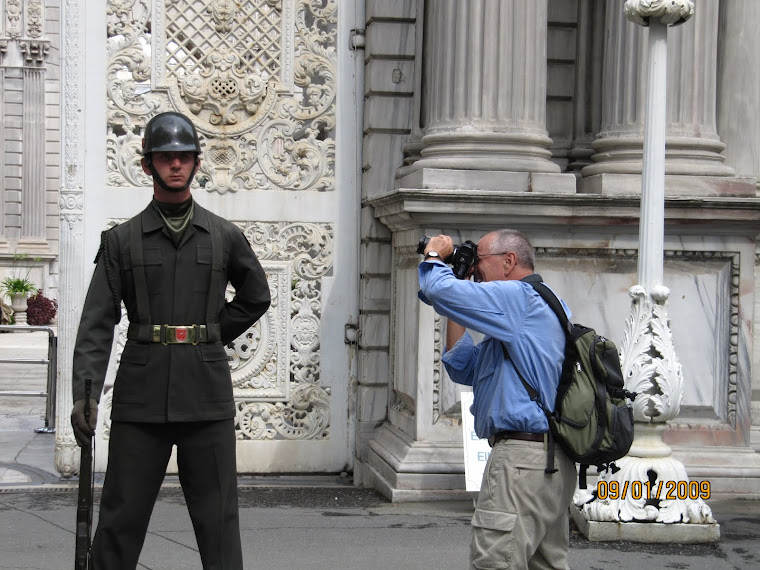
Sunday, October 10, 2010

Le petit prince

Packing up and leaving a place you have stayed for several weeks is often difficult.   Themes and characters from Le Petit Prince by St. Exupery come to mind- the pilot; the little prince, the rose, the fox.   One spends quality time with others; cree des liens, creates friendships, and thus assumes some responsibilty for protecting and maintaining them.

I gave Adama a final hug- a strong embrace, and then looked back to see him standing at the entrance barrier and wave a final good-by.   He has to review for his final exams and doesn't need any distractions.  He will make a dedicated doctor with a promising future and I am satisfied that my visit has expanded his horizons.   It would be so simple to tour, photograph a place, and then leave; however, spending time with people you encounter, eating together, meeting family members, sharing experiences- all of this complicates matters and makes a departure more difficult and even emotional.  My connection with Adama Diarra requires a separate chapter, so I will reserve that until later, but there are mini-stories as well.

Mathias, the 38 year old father I met sitting in front of a tailor shop on the edge of a very poor neighborhood, not working because he has malaria, planning to return to his job at a milk processing plant the following day, finally taking some medecine from a pharmacy after using traditional remedies (cheaper) that don't work.
I walk across the dirt street to the entrance of the building where he, his wife who is 7 months pregnant and their 3 year old daughter live in a 2 room apartment.  They cook in front of the door and use communal toilet facilities.  Mathias and I walk through neighborhood streets, step over and around raw sewage, pass the locked faucet where they must pay for buckets of water used for drinking and cooking.  Bathing water comes from an open well and often causes their skin to itch.    Studying to become a teacher, Mathias discontinued his studies because he would  have been sent to a distant rural village to have a job, with wages on which he could not survive.   He accepted his current job in order to marry and begin a family.  His salary of 120 dollars per month barely pay for his lodging and food and he walks 30 minutes each way to his job in order to save the 20 cent mini-bus fare.   We entered the neighborhood school where I met some of the teachers and observed classes of 80-100 students.  The students stood when I entered, some of them showing me the cardboard "slates" on which they were practicing letters of the alphabet.  
This is the real Mali!    I invited Mathias to meet me in the hotel courtyard for a few more hours of conversation before I left.

Bakary Camara, the waiter in a small Lebanese restaurant near the Hotel Tamana.  After discovering he was from Guinea, I wanted to learn more.  With his boss observing his every move, there was no possibilty for conversation in the restaurant, so I invited him to the hotel courtyard during his free time.  He has a degree in accounting, left Guinea due to political unrest and accepted this job while looking for something more permanent.  The restaurant owner is very controling so he has to be careful of his every move- long hours, one day off per week, and wages that only leave him about 10 dollars per month for food; this in a restaurant where the average meal costs 7-10 dollars!   Great insight into the motives and practices of foreign owers in developing African countries.   How are the people of Mali supposed to raise themselves out of poverty?

I walk home on a narrow raised pathway through small, raised plots of soil where lettuce is being grown, mostly for upscale hotels.  The worker who is in constant motion catches my eye- the man irrigating each plot by throwing his watering can into an open well, pulling it to the surface and spreading the contents on the next 2-3 plots.  A hummingbird, a bee, a butterfly?   Probably in his 40's, missing his front teeth, this man has the physique of an athlete who spends every morning at the gym.

On to Morocco.

Wednesday, October 6, 2010

Getting there

A main goal while in Mali was to meet the family, and visit the Dogon village of, Adama, the student I have known since my last visit three years ago.   This meant a round trip of at least 1200 miles from Bamako using a 4x4 with driver, meeting a guide who knew the roads and villages and spending 8-10 days en route.  

We began the trip by driving for 12 hours from Bamako to Mopti, arriving after dark.   Pot holes in the highway, donkey carts, herds of cattle and flocks of sheep and goats crossing the road, villages holding markets, lunch stop for rice with gumbo sauce; a long tiring day through the brousse- brush and pasture land punctuated with some large trees, lots of millet and corn fields, ponds and water holes where cattle drink, children splash and swim, people bathe and women wash clothes.   Since the rainy season has just ended, there is plenty of water everywhere and the grass is still green.

Overnight at the Pas de Probleme Hotel in Mopti, visit the port filled with wooden boats called pinasses that transport people and products along the Niger.   The marketplace is always animated with people selling everything imaginable and the boat building and repair area filled with activity- blacksmiths fabricating metal parts and carpenters working with the long wooden planks, both being assisted with their sons.   Buy cases of bottled water and some other supplies that will be needed in an area where stores and shops do not exist and leave for Bandiagara, the beginning of the Dogon region.   We arrive at the end of the Bandiagara escarpment that rises out of this vast plains and desert area and descend a very steep winding paved road to the villages at the bottom of the cliff-  one sign announces a 16 percent down grade.   I wonder if anyone bothered to check the brakes!    No more paved roads, and in fact, places where there are NO roads.  This is the country of pathways, donkey cart trails and traces in the sand.  The Dogon people raise millet and a kind of "wheat" that grows on stocks that look like corn.  Children watch the cattle as they go to graze each day, mothers and daughters spend the day pounding millet and preparing meals, fathers seem to spend many hours conversing in the shade.   Maybe this isn't totally fair, because I think everyone helps with the planting and harvesting of crops.   Overnight under a mosquito net on the roof of a mud adobe brick building counting meteorites and watching the stars, morning investigating the ruins of a former civilization that lived on  ledges of the cliff.   Off to the next village fiording streams, avoiding eroded trenches, dodging animals- me seated in the back seat bracing myself by using both hand holds above the door.  Time to climb to a village located on the top of the cliff, a 2 hour climb up a steep ravine, climbing over boulders and up stones arranged as a rudimentary stairway.   Is it really about 95 degrees?   We consume 2 liter bottles of water that immediately leaves our bodies as sweat.   My second time to this village called Beignemato; located on the edge of the cliff, it has fantastic views of the plains and villages some 1200 feet below.  It is definitely worth the climb. 
Back down the trail and on to the next village.   Three nights and 12 villages later we arrive at our destination, Kassa.  The final day of driving was worthy of a TV commercial for Toyota Land Cruisers!   First of all, the guide did not know the way, so we had to ask villagers and herdmen along the way- traveling through sand dunes with no visible road, trails between fields of millet, and fiording streams and standing water.   At one point we arrived at a river where a herd of cattle was crossing with water nearly over their backs.  The guide entered the water to find a more shallow area and finally located a crossing only one meter in depth- still a challenge for the 4x4.   I held my breath as we pushed our way through the 100 foot width of the stream under the gaze of nomad herdsmen, astonished cows and even a camel!   We arrived safely without the motor stalling and continued on our way.   The roadway became bed rock and large stones, impossible for the vehicle to continue.   We packed essential items in a backpack, took bottles of water, and walked the last 3 miles to the village in 90+ degree heat!   Warm greeting, friendly appreciative family, wonderful connections, part of another chapter.    We only stayed one night since the driver and guide camped at the foot of the mountain and we were unsure of the road conditions for the return.   Ate the chicken that was offered to me as a gift, accepted mangos and bananas for the trip back and said an emotional farewell to the family.   A memorable and exciting experience§